


Entered the Union
December 7, 1787 (1)
Capital: Dover
State Symbols
Tree:
American Holly
Flower
: Peach Blossom
Bird
: Blue Hen Chicken
Song: “Our Delaware”
Delaware |
|
| Origin of Name: In honor of Thomas West, Third Baron De La Warr, Virginia's first colonial governor. | |
| State Nicknames: Diamond State • First State • Small Wonder | |
| State Motto: Liberty and Independence | State Beverage: Milk |
| State Colors: Colonial blue and buff | State Fish: Weakfish |
| State Forests: 3 • State Parks: 17 | State Mineral: Sillimanite |
|
Famous For: First State to ratify the Constitution of the United States •
Oldest Protestant Church in the U.S. -- Holy Trinity Church (built in 1698) |
|
| Famous Delawareans: Annie Jump Cannon (astronomer), E. I. Du Pont (industrialist), Thomas Garrett (abolitionist), Henry Heimlich (surgeon, inventor), William Julius "Judy" Johnson (baseball), George Read & Ceasar Rodney (signers of Declaration of Independence), George Alfred Townsend (journalist, author) | |
| Native Animals and Birds: Click on photos of the animals and birds on this page to find out more about them and to hear the sounds they make. | |
|
|||||||||||
| The Lenape Indians lived along the Delaware River (English settlers later called them the “Delaware”). The Nanticoke lived along the Nanticoke River in the southwestern part of the state. | |||||||||||
| Henry Hudson, is credited with Delaware's discovery in 1609. An attempted Dutch settlement failed in 1631 when the Indians killed the settlers. Swedish colonization began at Fort Christina (now Wilmington) in 1638, but New Sweden fell to Dutch forces in 1655. England took over the area in 1664, and it was transferred to William Penn in 1682. Semiautonomous after 1704, Delaware fought as a separate state in the American Revolution. | |||||||||||
| Delaware was the first state to ratify the United States constitution (on December 7, 1787). Because of this action, Delaware became the first state in the Union, and is, therefore, accorded the first position in such national events as presidential inaugurations. | |||||||||||
| Among Delaware's many historic churches is Old Swedes Church in Wilmington which has been in use since its completion in 1698. | |||||||||||
| One of the longest twin span suspension bridges in the world is the Delaware Memorial Bridge that connects Delaware with New Jersey. | |||||||||||
| Delaware has no full 'National Park' in the strict sense, but First State National Historical Park, a National Park Service site, was established here in 2013. | |||||||||||
| Of the 50 US states, Delaware is the 49th in size and 45th in population. | |||||||||||
| At its widest point, Delaware is 35 miles across. | |||||||||||
| Eldridge Reeves Johnson was born in 1867 in Wilmington and grew up in Dover. He perfected the spring-motor phonograph and founded the Victor Talking Machine Company, now known as RCA. | |||||||||||
| The log cabin originated in Finland. Finnish settlers arrived in Delaware in the mid-1600s and brought with them plans for the log cabin, one of the enduring symbols of the American pioneer. One of the cabins has been preserved and is on display at the Delaware Agricultural Museum in Dover. | |||||||||||
| Thomas Garret lost his entire fortune in his battle against slavery. He was sued by a Maryland slave owner and fined for aiding a black family in flight. Over his lifetime, Garrett reportedly helped more than 2,000 fugitive slaves move through Delaware, an important stop on the Underground Railroad. | |||||||||||
| Delaware's Ethnic Roots: African 19.2%, Irish 16.6%, German 14.3%, English 12.1%, Italian 9.3%. | |||||||||||
| Delaware has the highest proportion of African-American residents of any state north of Maryland, and had the largest population of free blacks (17%) prior to the Civil War. | |||||||||||
| Religion in Delaware: 79% Christian (68% Protestant, 10% Catholic, 1% Other), 19% No Religion, 2% Other Religions | |||||||||||
| Eleuthère Irénée du Pont, a French immigrant, built the state's first gunpowder mill on Brandywine Creek near Wilmington in 1802. The Du Pont Company would eventually become the largest chemical company in the United States. | |||||||||||
| The Du Pont Laboratories first produced nylon at its plant in Seaford. This earned the town the distinction of being the Nylon Capital of the World. | |||||||||||
| Hagley Museum was originally the du Pont black powder manufactory, estate, and gardens. | |||||||||||
| The frying pan built in 1950 for use at the Delmarva Chicken Festival is 10 feet in diameter and holds 180 gallons of oil and 800 chicken quarters. | |||||||||||
| Horseshoe crabs may be viewed in large numbers up and down the Delaware shore in May. The crabs endure extremes of temperature and salinity. They can also go for a year without eating and have remained basically the same since the days of the dinosaur. |


At a Glance
Delaware Quick Facts
| Entered the Union | December 7, 1787 (1) |
|---|---|
| Capital | Dover |
| Nickname | Diamond State • First State • Small Wonder |
| State Bird | Blue Hen Chicken |
| State Flower | Peach Blossom |
| State Tree | American Holly |
New for 2026
More Delaware Facts & Photos
First State National Historical Park became Delaware's first National Park Service site: proclaimed a national monument in 2013, it was expanded by Congress into a historical park in 2015.
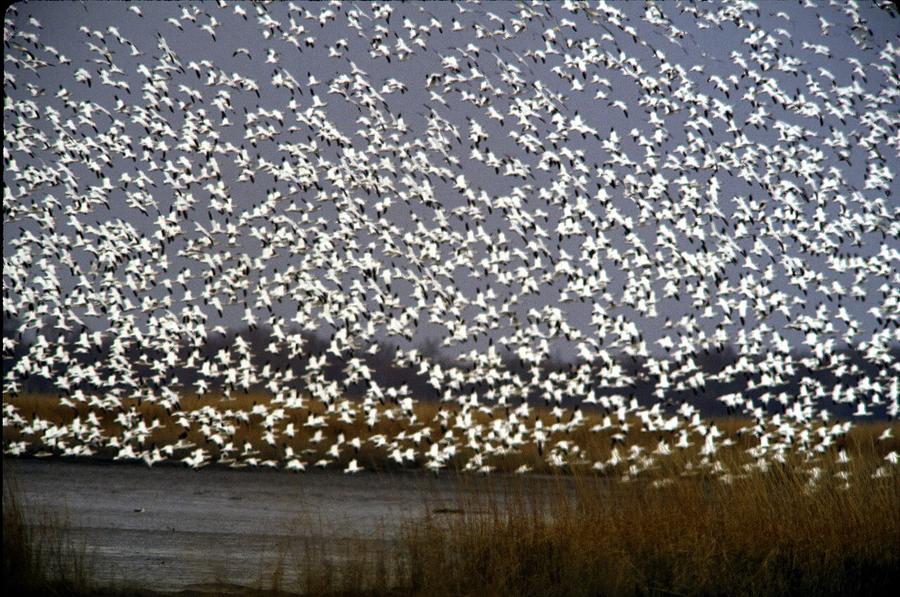
Bombay Hook National Wildlife Refuge, established on Delaware Bay in 1937, protects one of the largest stretches of unaltered tidal salt marsh in the mid-Atlantic. In some winters more than 100,000 snow geese crowd its pools.
The ladybug became Delaware's official state bug on April 25, 1974, after a second-grade class from Milford's Lulu M. Ross Elementary School spent nearly a year lobbying the legislature.
The beaches of Cape Henlopen have been public land since 1682, when William Penn declared them open for the use of the citizens of Lewes and Sussex County, one of the first public lands in America.
Delaware's northern border is the only circular state boundary in the country: the Twelve-Mile Circle, an arc drawn twelve miles out from the courthouse cupola in New Castle.
Voices of America
In Their Own Words
"Statesmen may plan and speculate for liberty, but it is religion and morality alone, which can establish the principles upon which freedom can securely stand. The only foundation of a free Constitution is pure virtue, and if this cannot be inspired into our People in a greater Measure than they have it now, they may change their rulers and the forms of government, but they will not obtain a lasting liberty."
Last updated: July 2026