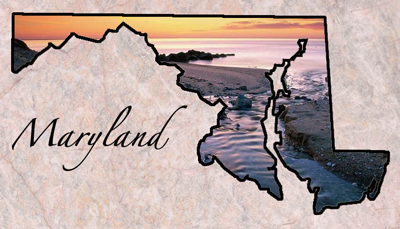


Maryland |
|||
| Entered the Union: April 28, 1788 (7) | Capital: Annapolis | ||
| Origin of Name: In honor of Henrietta Maria (queen of Charles I of England) | |||
| State Nickname: Old Line State | State Bird: Baltimore Oriole | ||
| State Flower: Black-Eyed Susan | State Tree: White Oak | ||
| State Dog: Chesapeake Bay Retriever | State Horse: Thoroughbred | ||
| State Song: "Maryland! My Maryland!" | State Cat: Calico | ||
| State Motto: Fatti maschii, parole femine (Strong Deeds, Gentle Words) | |||
| State Forests: 7 • State Parks: 40 | |||
| Famous For: Johns Hopkins University, Annapolis US Naval Academy, Chesapeake Bay, Assateague Wild Ponies | |||
| Famous Marylanders: Eubie Blake (musician), John Wilkes Booth (actor who assassinated Lincoln), Samuel Chase • Thurgood Marshall (US Supreme Court), Frederick Douglass (abolitionist), Christopher Gist (frontiersman), John Hanson (president of Continental Congress), Matthew Henson (polar explorer), Billie Holiday (jazz-blues singer), Johns Hopkins (financier), Francis Scott Key (lawyer, poet), Babe Ruth (baseball), Upton Sinclair (novelist), George Alfred Townsend (journalist), Harriet Tubman (abolitionist), Frank Zappa (singer) | |||
| Animals and Birds: Click on photos of the animals and birds on this page to find out more about them and to hear the sounds they make. | |||
|
|||||||||||||
| In 1608, Capt. John Smith explored Chesapeake Bay. Charles I granted a royal charter for Maryland to Cecil Calvert, Lord Baltimore, in 1632, and English settlers, many of whom were Roman Catholic, landed on St. Clement's (now Blakistone) Island in 1634. Religious freedom, granted to all Christians in the Toleration Act passed by the Maryland assembly in 1649, was ended by a Puritan revolt (1654–1658). | |||||||||||||
| In 1814, during the British attempt to capture Baltimore, the bombardment of Fort McHenry inspired Francis Scott Key to write the words to “The Star-Spangled Banner.” | |||||||||||||
| Maryland's Eastern Shore and Western Shore embrace the Chesapeake Bay. The Bay produces more seafood—oysters, crabs, clams, fin fish—than any comparable body of water. | |||||||||||||
| According to some historians, Gen. George Washington bestowed the name “Old Line State” and thereby associated Maryland with its regular line troops, the Maryland Line, who served courageously in many Revolutionary War battles. | |||||||||||||
| King Williams School, the first school in the United States, opened in 1696. | |||||||||||||
| The first dental school in the United States opened at the University of Maryland. | |||||||||||||
| The first practical refrigerator was invented in Baltimore in 1803. | |||||||||||||
| The Mason-Dixon Line, named after the British surveyors who mapped it between 1763 and 1767, marks the boundary between Maryland and Pennsylvania. | |||||||||||||
| Baltimore is named after Cecil Calvert who received the Maryland Colony from King Charles I. His title was “Lord Baltimore.” | |||||||||||||
| The first woman in the new world to demand the right to vote was Mistress Margaret Brent, St. Mary's City, 1648. | |||||||||||||
| Wild ponies live on the islands of Chincoteague and Assateague off the coast of Virginia and Maryland. The Ponies are a race of small hardy horses, compact and good natured. The legend is that these ponies swam ashore from a Spanish Vessel which had capsized off the coast, around the century 1600. Once on the islands they became stunted under the harsh environment. The horses bred down to the unique breed we know today as the Chincoteague Pony. | |||||||||||||
| The first telegraph message, "what hath God wrought," was sent from Baltimore to Washington, D.C. on May 24, 1844. | |||||||||||||
| The first African American scientist, Benjamin Banneker, was a Marylander who in 1791 became the first African American employee of the federal government. | |||||||||||||
| In 1831, the B&O (Baltimore & Ohio) Railroad set a speed record at an incredible 30 miles per hour! | |||||||||||||
| The Basilica of the Assumption of the Blessed Virgin Mary is considered a masterpiece and one of the finest 19th century buildings in the world. The basilica is the first cathedral in the United States. Baltimore represents the first Roman Catholic diocese. | |||||||||||||
| King Williams School opened in 1696 it was the first school in the United States. | |||||||||||||
| Maryland Ethnic Roots: German 15.7%, Irish 11.7%, English 9%, American 5.8%, Italian 5.1% | |||||||||||||
| Religion in Maryland: 82% Christian (56% Protestant, 23% Catholic, 3% Other), 14% No Religion, 3% Jewish, 1% Other Religions | |||||||||||||
| Annapolis is known as the sailing capital of the world. | |||||||||||||
| On September 14, 1975, Elizabeth Ann Bayley Seton of Emmitsburg was canonized, becoming the first native-born American to be so honored. Saint Elizabeth Ann formed the religious community the Sisters of Charity. | |||||||||||||
| Maryland gave up some of it's land to form Washington D.C. |


At a Glance
Maryland Quick Facts
| Entered the Union | April 28, 1788 (7) |
|---|---|
| Capital | Annapolis |
| Nickname | Old Line State |
| State Bird | Baltimore Oriole |
| State Flower | Black-Eyed Susan |
| State Tree | White Oak |
New for 2026
More Maryland Facts & Photos
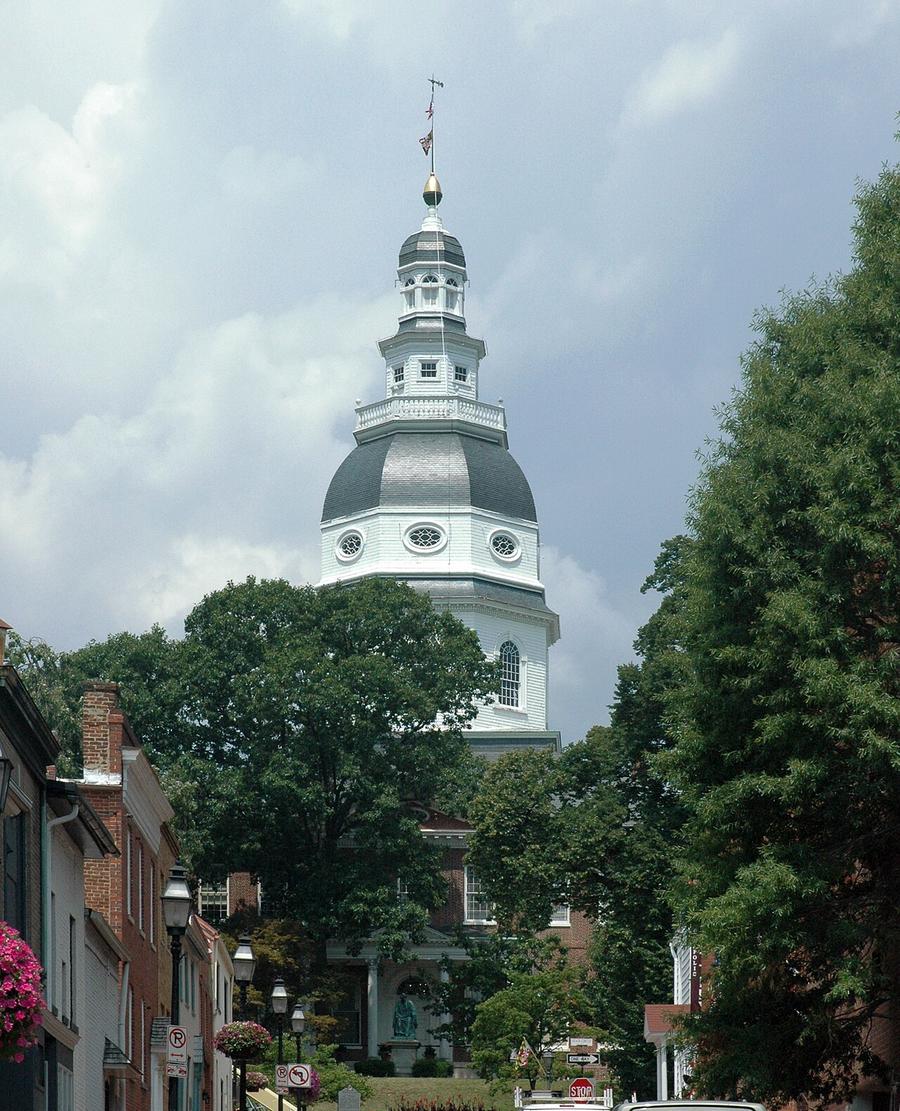
The Maryland State House is the oldest state capitol in continuous legislative use. Congress met there in 1783-84; George Washington resigned his commission in its Old Senate Chamber, and the Treaty of Paris was ratified there.
The bloodiest single day in American history unfolded near Sharpsburg on September 17, 1862, when the Battle of Antietam left about 23,000 soldiers dead, wounded, or missing.
Maryland became the first state with an official sport when it adopted jousting in 1962. Ring tournaments have been held in the state since colonial days.
Since 2008 the official state dessert has been the Smith Island Cake, a stack of eight to twelve thin layers with chocolate frosting between each one.
More than 600 fossil species from 10 to 20 million years ago erode out of the Calvert Cliffs, where visitors comb the beach for prehistoric shark teeth.
Maryland named the skipjack its state boat in 1985. The sailing workboats dredged Chesapeake oysters for a century as the last commercial fishing fleet under sail in the United States.
Voices of America
In Their Own Words
"He will therefore seek to establish for his country in the eyes of the world, such a character as shall make her not unworthy of the name of a Christian nation."
"The General hopes and trusts that every officer and man, will endeavor so to live, and act, as becomes a Christian Soldier defending the dearest Rights and Liberties of his country."
July 9, 1776
"The highest glory of the American Revolution was this: 'It connected in one indissoluble bond the principles of civil government with the principles of Christianity."
July 4, 1821
"Can the liberties of a nation be thought secure when we have removed their only firm basis, a conviction in the minds of the people that these liberties are the gift of God?"
Last updated: July 2026